In a rapidly changing job market, having the right degree or a list of certifications is no longer enough to build a successful career. Employers are increasingly looking for people who can learn quickly, adapt to change and apply their knowledge to real-world situations.
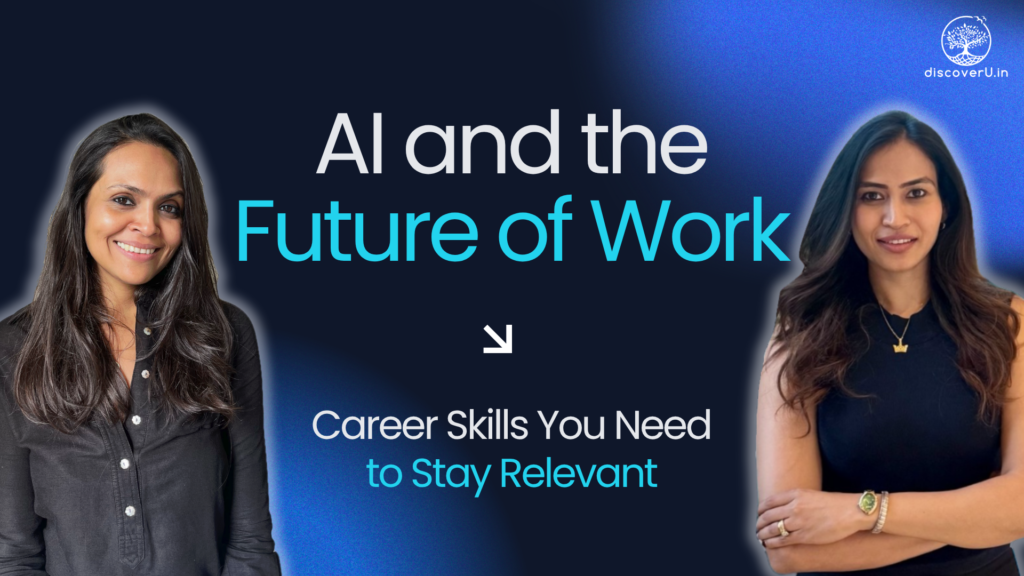
With nearly two decades of experience across aviation, banking, global visa services and technology, Priya Baptista has seen how careers evolve and what organisations genuinely look for in candidates. Today, as Head of Learning and Development and Employee Engagement at CleverTap, she works closely with business leaders and employees to build learning strategies, strengthen leadership capabilities and prepare teams for the future of work.
In this conversation with DiscoverU, Priya discusses her own transition from airline operations to learning and development, the importance of understanding an industry before entering it, how AI is reshaping careers, and why curiosity, accountability and the ability to influence others may matter more than qualifications on a résumé.
“If you have learnability, the sky’s the limit.”
Q & A with Priya Baptista
You have a BSc in Chemistry, but you began your career in airline operations. What was that transition like?
I realised that the science lab was not where I was meant to be, thanks to a career counselling session I went through. I completed a psychometric assessment and behavioural analysis, and when I sat down with my career coach, she told me that I was probably not in the right space and should consider moving. She suggested aviation and mass media as possible options. At that point, I had already started my BSc, so I decided to complete my degree and then explore a career in aviation. Looking back, that advice was accurate because the moment I entered aviation, I really started enjoying the work. Airline operations taught me a lot about who I am today. There is very little room for error in aviation, so processes, policies and adherence to them matter greatly. Safety, security and people are extremely important. I learned discipline, process orientation and the importance of grooming and presenting yourself well. Those lessons have stayed with me throughout my career. I also developed a strong sense of customer orientation and learned how important it is to understand and cater to customer needs. Whether I am dealing with an internal customer, such as a stakeholder, or an external customer interacting with a product, the importance of serving people well can be traced back to my early years in aviation.
When did you realise that training and developing people was something you wanted to pursue as a career?
The opportunity came when I was working with Cathay Pacific Airways. After spending a couple of years in the organisation, I began taking the initiative to train new joiners on check-ins, boarding procedures and soft skills. I started enjoying that experience because I realised that I liked teaching, sitting with people, spending time with them and helping them learn. That was when I became interested in pursuing learning and development more seriously. Later, at Kingfisher Airlines, I moved into a full-fledged learning and development role. That gave me the opportunity to strengthen my training delivery and facilitation skills. I was conducting training programmes regularly, and I really enjoyed interacting with people and helping them learn something new. There is a certain satisfaction you feel at the end of a good training session when you know that the participants have gained something valuable. I found that experience very fulfilling, and over time, I realised that this was the kind of work I genuinely wanted to do.
“I liked teaching. I liked sitting with people, spending time with them and helping them learn.”
You have worked across aviation, banking, global visa services and technology. What has this range of industries taught you about people and organisations?
The biggest thing I have learned is that people genuinely want to learn. They look for someone who can guide them, show them the way and help them understand where they can find the information they need. When you work in learning and development, you play a powerful role because you are responsible for supporting people’s growth, helping them upskill, enabling them to understand processes and helping them speak the language of the business. I believe people are willing to learn as long as they can translate that learning into meaningful action. Training should not be limited to theory or knowledge-sharing. People should be able to apply what they have learned in their day-to-day work. That is when learning becomes valuable. I have also understood that organisations want employees to understand and speak the language of the business. It is important to know how the company works, what its priorities are and how your role contributes to its larger goals. Spending time learning the business well can be a real game changer. The industries may change, but learning remains at the core of everything.
Was there a particular role or experience that became a turning point in your career?
My experience in the global visa services sector was a significant turning point for me. It was a massive organisation with around 10,000 employees, and I had the opportunity to build a learning management system from scratch. That meant getting my hands dirty and working on things I had not encountered before. Learning something new, working through the challenges and eventually mastering it helped me grow tremendously. It also made me realise that if I wanted to impart knowledge effectively, I first needed to keep gaining knowledge myself. My own upskilling became extremely important. I started paying close attention to the latest learning systems, tools and practices in the industry. I wanted to understand what was changing and how those changes could help me support employees more effectively. Staying connected to my craft and continuing to learn became critical to my professional growth.
From your position within learning and development, why is this such an important time for young people entering the workforce?
I think this is a very exciting time to enter the workforce because organisations are increasingly looking for people who can learn quickly and ramp up fast. If you have learnability, the sky’s the limit. I believe the workforce entering organisations today already has a strong ability to learn, and that can become a significant advantage. Companies are also becoming more adaptive and forward-looking. They are increasingly open to people questioning the status quo, bringing new ideas and looking at problems differently. There are also many creative roles in the talent market today that did not exist in the same way a few years ago. New-age teams need people who can adapt, experiment and keep learning. So, I feel it is a good time to enter the workforce, provided you are willing to remain curious and keep developing yourself.
What are organisations genuinely looking for in candidates today?
I believe organisations are looking for people with a curious mind and a strong willingness to learn. A résumé may represent your qualifications and experiences, but what matters is whether you can apply what you have learned in real life. In college, you may have worked on several projects, but once you enter an organisation, your work can have a direct impact on people, customers and the business. That requires a different level of accountability. Curiosity is important because it encourages you to ask questions and understand how things work. Learnability is equally important because no matter how much you know today, there will always be something new to understand tomorrow. Organisations also look for people who can take responsibility for a particular task or area of work. Can you own something? Can you deliver on it? Can you be accountable for the outcome? These are important questions. Interviewing skills help organisations assess these qualities, but ultimately, they want to know whether a person can handle responsibility and contribute meaningfully to the team.
Beyond technical skills, which human skills will become more valuable as AI becomes more common at work?
I believe three skills will remain particularly important: problem-solving, judgement and the ability to influence. AI can provide answers, but you need to know how to ask the right questions. That requires problem-solving ability. Are you able to understand the problem clearly and frame the right question before looking for a solution? The second skill is judgement. AI can give you an output, but you still need to decide how to apply it and which option makes the most sense in a particular situation. That decision requires context and judgement. The third, and perhaps the most human skill, is the ability to influence. In any organisation, your ability to influence stakeholders, customers, teams and leaders can have a significant impact on your success. These are skills that technology cannot simply replace. They are developed through experience, observation, communication and working with people. I believe they will remain relevant regardless of how much technology changes.
“AI will give you the answers, but you have to give it the right questions.”
Are there skills or areas that young people are underinvesting in today?
One area where I think young people need to invest more time is understanding the industry they want to enter. It is not enough to know the name of a role or to read a job description. You should understand how the industry works, what the business does and how the organisation creates value. When I participate in interviews, I often see candidates reading out their résumés. I may already know what is written on the résumé, but I want to understand whether the candidate knows what our organisation does and how their skills, qualifications and certifications can be applied to the role. That is where the gap often appears. Researching the industry, understanding the business lifecycle and learning about the work you are going to do is a valuable investment. The other area is AI. Young people should spend time understanding how AI can help them work more effectively. Organisations want to move quickly and improve productivity, so knowing which AI tools can support your role and how to use them responsibly can make a difference.
You are currently leading an AI fluency initiative. Should young professionals see AI as a threat or an opportunity?
I believe people should see AI as an opportunity to grow. If you are able to grow with AI, that is when your real potential will become visible. AI can help you become more productive, save time and explore information in ways that were previously difficult. It can help you research, gather knowledge and approach tasks differently. Instead of looking at AI as something that will take opportunities away, I would encourage people to ask themselves what more they can do with the help of AI. The important thing is not to use it as a substitute for thinking. You should use it as an enabler. The way you look at the technology matters. If you see it as a tool that can help you improve your work, you are more likely to discover its value. But if you depend on it entirely and stop developing your own abilities, it can become a crutch. The real opportunity lies in learning how to work with AI while continuing to develop your own judgement, creativity and problem-solving skills.
What practical steps should a young graduate or mid-career professional take over the next 12 months?
The first thing I would recommend is investing time in reading and researching the domain in which you want to build a career. This is often underrated, but it is an extremely valuable investment. Follow the industry, understand current trends and learn what organisations in that space are doing. Today, companies publish a great deal of information in the public domain, so there is plenty of content available for people who are willing to look for it. This research will also help you during interviews because you will be able to have more informed conversations. The second step is to invest time in learning AI and understanding how it can help you in your day-to-day work. Explore tools that can make your tasks faster, easier or more effective. The third step is to stay true to yourself. There is so much happening in the market, and it can sometimes feel as though everyone else is doing more or moving faster. Take time to reflect on what you actually want to do. Understand your interests, your strengths and the kind of work that gives you satisfaction. Research, AI skills and self-reflection can provide a strong foundation for the next stage of your career.
Are certifications and degrees overrated when it comes to hiring?
I would say that certifications, especially multiple certifications, can sometimes be overrated. When you look at a résumé, you may see several certifications and degrees listed, but the important question is whether the person can explain how those qualifications will help them perform the job. There can be a significant mismatch between what someone has studied and how they are able to apply that learning. Sometimes candidates introduce themselves by mentioning the college they attended or the reputation of their university. While it is understandable to feel proud of your educational background, that is not necessarily your identity. I would rather understand what you learned, how that learning shaped you and how it will help you contribute to the role. Qualifications can open a door, but they do not automatically demonstrate capability. What matters is how you translate your knowledge into action.
What genuinely impresses you when you meet candidates?
What impresses me is an outcome-driven approach. I want to understand what someone has actually done, whether it was in a previous job, an internship, a college project or another experience. Organisations work with timelines, deliverables and outcomes, so it is important to show that you understand how your actions can lead to results. I also look for a genuine willingness to learn. Even if someone has not had the opportunity to do something before, their interest in learning and their readiness to take responsibility can be very telling. I would rather meet someone who is curious and willing to learn than someone who has collected several qualifications but cannot explain how to apply them. The ability to connect your experience to the needs of the organisation is extremely important.
When an interviewer asks, “Tell me about yourself,” what should candidates avoid doing?
I think one common mistake is starting with the name of your college. When someone says, “I completed my degree from this particular college,” I feel that is not necessarily their identity. Your identity is who you are, what you have done and what you have learned along the way. Of course, your educational background is relevant, but it should not be the entire introduction. Instead, talk about the experiences that have shaped you, the skills you have developed and what those experiences have taught you. Explain how your learning connects to the role you are applying for. Employers want to understand the value, strengths and skills you bring to the table. They are interested in what you can contribute, not simply the brand name of the institution you attended.
“Your identity is who you are, what you have done and what you have learned.”
How can young people prepare themselves for the realities of the workplace and avoid burnout?
When you begin your career, a lot of things change very quickly. Suddenly, you are responsible for multiple deliverables, you have tight timelines, you need to work with a team and you have to understand your manager’s expectations. These are dynamics you may not have experienced to the same extent in college. Preparing yourself for what is coming can make the transition easier. It is also important to set expectations with your manager or team leader. Burnout can sometimes emerge when there is a lack of understanding between people who work together. Communicating openly about what helps you work effectively can make a difference. At the beginning of a career, it is useful to observe how people work, understand different personalities and learn how to collaborate with others. We use tools such as the MBTI during new-joiner programmes to help people understand themselves and those around them better. Most importantly, young professionals should be kind to themselves. Starting a career is not easy, and it takes time to adjust. Good communication, realistic expectations and self-awareness can help make that transition smoother.
Do internships, college projects and voluntary work make a difference when starting a career?
Absolutely. I think an internship is an excellent starting point because it gives you exposure to how work actually happens. Voluntary work, working with an NGO or taking up other meaningful responsibilities can also help you learn. College projects are valuable as well because they teach you how to work with others, organise tasks and complete something within a deadline. The difference is that, in college, the outcome may primarily be connected to grades or marks. In a workplace, your work has real consequences for customers, teams and the organisation. Any opportunity that allows you to experience responsibility, collaboration and outcomes can help you prepare for that transition. These experiences also help you understand whether a particular kind of work interests you before you commit to it as a career.
What would you say to people who feel behind when they compare their careers with those of others?
I think a little pressure can sometimes be useful because it may motivate you to improve. However, you also need to understand your own threshold and ask yourself what “good enough” means for you. The most important question is: “I haven’t arrived yet compared to whom?” Are you comparing yourself with someone else, or are you looking at your own journey? If you are comparing yourself with another person, remember that their journey is different from yours. They may have had different opportunities, experiences and circumstances. If you are looking at your own journey, then take time to recognise your milestones and appreciate how far you have come. We often forget to do that. It is fine to have goals and to want to grow, but if comparison starts affecting you negatively or constantly occupies your mind, it may be time to pause. Focus on your own progress and give yourself credit for the steps you have already taken.
“Their journey would be very different from yours. If it is your own journey, take time to appreciate where you have reached.”
Key Learnings
Learnability Matters More Than Pedigree
The ability to keep learning and adapt can matter more than the name of your college or the number of certifications on your résumé.
Understand the Business Behind the Role
Research the industry, follow its trends and understand how your skills can contribute to the organisation’s goals.
Use AI as an Enabler
AI can improve productivity and expand your capabilities, but it should support—not replace—your own thinking and judgement.
Develop Irreplaceable Human Skills
Problem-solving, judgement and the ability to influence others will remain valuable as technology evolves.
Focus on Application, Not Just Qualifications
Employers want to know how your education, certifications and experiences translate into meaningful work and outcomes.
Prepare for the Reality of Work
Internships, college projects and voluntary experiences can help you develop accountability, teamwork and practical workplace skills.
Build a Career That Fits You
Self-reflection can help you understand your interests, strengths and the kind of work you genuinely want to pursue.
Measure Your Own Progress
Instead of constantly comparing yourself with others, recognise your own milestones and focus on moving forward at your pace.
Conclusion
Priya Baptista’s career journey highlights how a willingness to learn can open doors across industries and roles. From airline operations to leading learning and development in the technology sector, her experience reflects the value of staying curious, building transferable skills and remaining open to change.
For young graduates and experienced professionals alike, her message is clear: understand the world of work, learn how to use emerging tools such as AI, and focus on applying knowledge rather than simply collecting qualifications. Most importantly, build a career that reflects your own strengths and goals—not someone else’s timeline.
Priya’s insights remind us that career growth is not just about reaching the next position. It is about continuing to learn, taking responsibility, adapting to change and becoming more capable with every step.
Priya Baptista is a learning and development professional with nearly 20 years of experience across aviation, banking, global visa services and technology. She currently serves as Head of Learning and Development and Employee Engagement at CleverTap, where she works on learning strategies, leadership development, employee engagement and AI fluency initiatives. Her experience includes building learning systems, developing training programmes and helping employees and organisations prepare for a changing workplace.