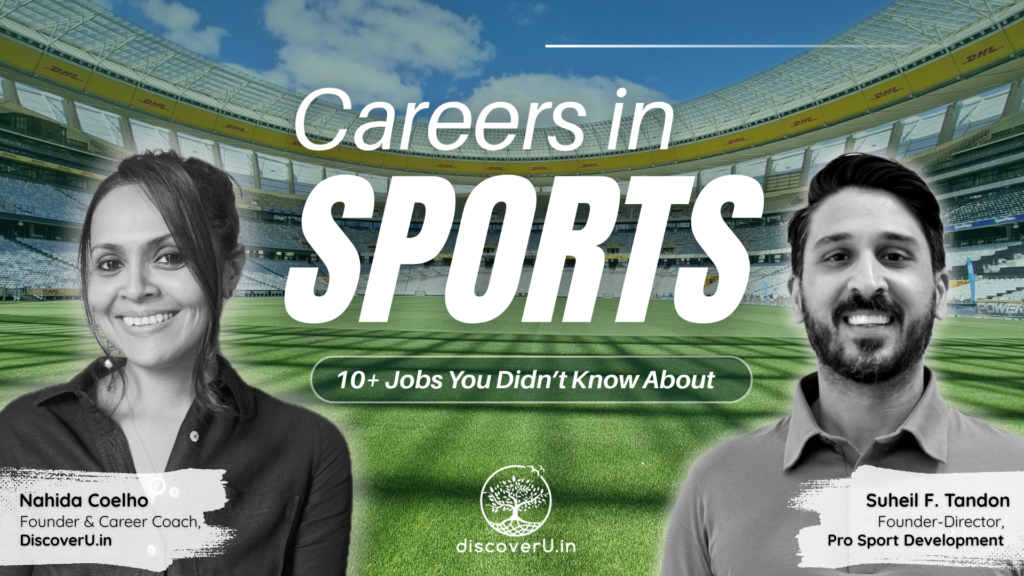
Sport is often treated as an extracurricular activity—something children participate in after their academic responsibilities are taken care of. But for Suheil Tandon, sport is much more than a game or a pathway to professional competition. It is a powerful tool for building confidence, resilience, teamwork and opportunity. As the Founder Director of ProSport Development, an award-winning social enterprise, Suheil has spent over 15 years working at the intersection of sport and social impact, helping young people access opportunities that may otherwise remain out of reach.
In this conversation with DiscoverU, Suheil reflects on his early experiences with sport, his decision to build a career in the sports sector, and his journey from studying mathematics and economics to pursuing sport management. He also explores the growing career opportunities within the sports industry, the importance of practical experience, and why every child deserves the right to play.
“There’s no lack of sporting talent in India. It’s just that those with the talent lack the opportunities.”
Q & A with Suheil Tandon
What does a typical week look like for you as the founder of ProSport Development?
Every week is quite different because my role has evolved over the years. I spend a little more time in the office on my laptop than I would like, but there are usually a mix of internal and external meetings. Some weeks are focused on fundraising proposals and meetings with potential donors. At other times, I may be more involved in the programmatic side of our work, communicating what we do, or attending internal board meetings and looking at compliance-related matters. As a founder, I have to get involved in many different aspects of the organisation, some more exciting than others. There is also a lot of travel involved, whether it is visiting one of our project locations or travelling to another city for meetings. We may be working in an urban setting one week and somewhere quite rural the next. One of the fun parts is that there is still a lot of play involved in our work. Lunch breaks with the team might include table tennis or another sport, and we often spend time over chai discussing sport, politics and everything else. So, while every week is different, there is always a combination of strategy, operations, travel, people and, of course, sport.
How did your early experiences with sport influence the way you think about its role in people’s lives?
When I was in school, I didn’t really understand how formative those experiences were. It was only much later, while I was working on my PhD, that I realised how fortunate I had been to attend a school with a structured physical education programme. I was encouraged to participate in different sports because we had teachers and coaches who made the effort to get us onto the field. I wasn’t particularly good at most of the sports teams I played for, but that wasn’t really the point. We were encouraged to participate, do our best, learn from both victories and defeats, and understand how to conduct ourselves on the field. Our physical education classes were structured and led by qualified teachers, and they taught me many things that went beyond the classroom. I played sport competitively in school and later in life, and while I do enjoy the competitive side, I think participation, camaraderie and the experience of being part of a team are much more important. Sport teaches you how to work with others, how to deal with setbacks and how to keep showing up. Looking back, I also began to recognise that these opportunities are still not available to everyone in India. That realisation played an important role in shaping the work I eventually chose to do.
Was sport always going to be your career, or did you have to make a conscious decision to pursue it?
I definitely had to make a conscious decision. When I was finishing school, I didn’t even know that it was possible to build a career in sport. I was good at science and mathematics, so I eventually chose to study mathematics and economics at McGill University in Canada. At the time, the choice was essentially between that and engineering. I had been told that mathematics was applicable everywhere, so that seemed like a sensible direction. It was only during my undergraduate years that I began speaking to people who were studying sport or pursuing careers in the sports industry. The sports sector in India was still at a very early stage, and there were not many opportunities to study sport formally in the country or to build a clearly defined career in the industry. I had to learn by speaking to people, understanding their journeys and finding out what different careers in sport actually involved. It wasn’t an easy decision because I knew that sport would grow in India, but it wasn’t yet a large or established industry. Ultimately, pursuing sport was a leap of faith. I had to work towards creating a pathway that wasn’t necessarily obvious at the time.
How did your time in Canada help you understand the sports industry?
Although I didn’t study sport as a formal subject in Canada, I became involved in the sporting community in other ways. I played cricket for a well-known club for three years, completed some coaching qualifications and also coached cricket in schools. These experiences gave me a much better understanding of how sport operates beyond simply playing the game. I learned how clubs function, how teams are managed and how coaches work with schools and young players. Being part of that community was valuable because I was able to learn directly from people who were involved in sport in different capacities. It also showed me that there are many ways to engage with sport. You don’t necessarily have to be a professional athlete to be part of the sector. You can coach, manage, organise, support or develop sporting programmes. Those experiences helped me build a foundation for the decisions I made later.
What did your postgraduate experience at Loughborough University in the UK open up for you?
My time at Loughborough was probably one of my best academic experiences because I was studying something I was genuinely passionate about. I was surrounded by people from different parts of the world who were equally interested in sport. We could discuss how sport worked in different countries and contexts, learn from one another and understand the industry from a much broader perspective. The teaching staff were also involved in cutting-edge research in sport, both in the UK and internationally, so there was a lot to learn from them. Alongside my studies, I became involved with the cricket teams at Loughborough. Because the university is such a major sporting hub in the UK, I was exposed to an elite sporting environment. I learned how elite setups work and what is required to move from grassroots participation to high-performance sport. Even though the postgraduate programme lasted less than a year, it gave me a great deal of exposure, knowledge and clarity. It helped me understand not only how sport is played, but also how sporting systems, institutions and development pathways function.
“It was one of my best academic experiences because I was doing something that I was really passionate about.”
You had opportunities to build a career in Canada or the UK. What brought you back to India and towards grassroots sport development?
While I was studying at Loughborough, I started thinking seriously about what I wanted to do after completing my degree. Youth sport and grassroots sport development were areas that interested me quite a lot. I was also clear that I wanted to return to India because there was a great deal of work to be done in this space. I knew that the sports industry in India would grow, although I wasn’t sure how quickly that growth would happen. I was open to gaining a few years of experience in the UK or elsewhere, but when that opportunity didn’t materialise, coming back to India and exploring possibilities here was a relatively straightforward decision. I had always felt that I wanted to contribute to changing the way sport worked in India. I wanted to do something meaningful in the sector rather than simply take up a role because it was available. Returning to India gave me the opportunity to explore that ambition and think about how I could create something of my own.
What was the founding idea behind ProSport Development, and what did the early days look like?
The idea behind ProSport Development was quite simple: there is no lack of sporting talent in India, but many talented young people lack the opportunities and support they need to move forward. I believed that 15 years ago, and I still believe it today. Before going to Loughborough, I had volunteered with an organisation called Gram Vikas in Odisha, which works primarily with tribal communities. The organisation ran residential schools for tribal children, and I spent time volunteering in those schools and supporting some of their sport-related work. At that stage, there wasn’t much happening in terms of structured sport programmes, but Gram Vikas was already exploring the possibility of developing sports initiatives in its schools. That gave us an opportunity to begin our first project there. We started by setting up physical education programmes and after-school sports clubs. Over time, we also worked in communities and government schools, and eventually developed a residential sports academy. The aim was not simply to identify talented athletes. We wanted to encourage participation in sport, ensure that young people had access to play, and then support those who were interested and motivated to continue their sporting journeys. That was the foundation on which PSD was built.
Did people take the idea of sport for development seriously when you started?
Not really, at least not in the beginning. I started PSD partly because there were very few organisations doing this kind of work. When I returned to India, I had imagined that I might start something of my own at some point, although I hadn’t necessarily expected to do it so early. I applied for jobs and internships, and some of those internships could have turned into full-time positions. However, most of the opportunities were in areas such as sports sponsorship and broadcasting, which didn’t really interest me or align with what I wanted to do. That was when I decided to start something independently. Sport for development was a very niche field at the time, and I knew only a handful of people working in school sport or similar areas. There was interest in our work, but people were unfamiliar with the concept. In many ways, we were ahead of the curve because we were doing things 15 years ago that are only now becoming more mainstream. Ultimately, people began taking us seriously when they could see the results of our work. It was very much a case of seeing being believing. Once people saw the difference our programmes made, they began to recognise that this was worthwhile work.
How did your understanding of sport change when you saw its wider impact on young people?
Initially, our focus was on nurturing sporting talent and providing young people with opportunities to participate. But as we worked with communities, we began to see that sport was having a much broader impact, particularly on girls. One of the most interesting things we noticed was that young people who were doing well in sport often began taking their academics more seriously as well. There is a common perception among parents and schools that if children spend time playing sport, their academic performance will suffer. Our experience showed the opposite. Some of our best athletes also became some of our best students. Sport also helped young people develop life skills that they may not have learned in the classroom, including teamwork, communication, resilience and collaboration. Participating in district, state and national tournaments gave them exposure to new places and allowed them to interact with other young people. That helped build their confidence. The most significant change we saw was among girls who were able to negotiate with their families to continue their education because of their involvement in sport. Many of them gained access to further education through sports quotas. Some eventually became sports coaches or physical education teachers in government schools, while others went on to pursue careers outside sport. Sport gave them a platform to dream bigger and consider possibilities beyond what their parents had experienced.
“It gave them a platform to dream big and pursue a career which wasn’t necessarily what their parents had done.”
Why do you believe sport should be treated as a central part of education rather than an extracurricular activity?
I would come back to what sport teaches us beyond the playing field. Sport develops skills and values that can be learned in other settings, but the sports field is often the most natural and effective place to develop them. These are skills that remain useful long after a child leaves school or stops playing competitively. In many of the under-resourced schools we work with, there simply isn’t enough capacity to provide learning opportunities beyond the routine academic subjects. So where are young people expected to develop skills such as communication, teamwork, resilience and decision-making? Sport can provide that environment. If you speak to elite athletes or anyone who has played sport for a sustained period, they will often describe lessons from the field that have stayed with them throughout their adult lives. India’s National Education Policy of 2020 also recognised the importance of sport and physical activity by placing them on par with other subjects. However, implementation remains inconsistent. In some schools, physical education is still scheduled at the very end of the day, almost as an afterthought. So while policy is changing, mindsets also need to change. Sport should not be valued only when it produces medals. It has an important role to play in the physical, emotional and social development of young people, as well as in addressing inactivity and lifestyle-related health concerns among adults.
What does sport teach us about failure, accountability and working with others?
I think sport gives you a particular advantage because it creates repeated opportunities to learn. If you play a sport week after week for six months or a year, you are constantly making decisions, dealing with setbacks and learning from your teammates and opponents. Internships can be useful, but not every intern is given meaningful responsibility. On a sports field, every player is responsible for the team. You have a coach, but once the game begins, you have to make decisions yourself. You have to decide whether to pass the ball, how to respond to an opponent, how to communicate with teammates and how to handle a difficult situation. You also have to negotiate, understand how you are coming across and take responsibility for your actions. It is a unique learning environment because you are required to act rather than simply observe. Sport also creates communities. Even people who don’t play may connect through their support for a team. Sport can bring people together even when they have very little else in common. There is research showing that many people in leadership positions outside sport have played sport at some point in their lives. That doesn’t mean playing sport is a requirement for leadership, but it can help develop skills that are valuable in many professional settings.
What career opportunities exist in the sports industry beyond becoming a professional athlete?
There are many more opportunities today than there were 15 years ago. One area is sports management, which includes a wide range of roles in broadcasting, sponsorship, sports marketing, event management and professional leagues. There are also opportunities in grassroots sport, school sports and academies. Within these settings, you could work as a programme manager, coach or administrator. Another growing area is athlete support. This includes coaches, strength and conditioning professionals, nutritionists, sports psychologists and other specialists who support athletes’ performance and wellbeing. These roles are currently more common in professional and elite sporting environments, but they are gradually becoming more relevant in private and state-run academies as well. Technology is also creating new opportunities. Sports analysts may work in video analysis, performance analysis or data analysis. Sports media is another developing area, with opportunities in content creation, journalism, broadcasting and digital communication. So the sports sector is not one single career. It is a broad industry with opportunities across management, coaching, science, technology, media, development and administration.
Is a formal degree in sports management necessary to build a career in sport?
For most sports careers, particularly in management, administration and development, you can enter the industry with a variety of educational backgrounds. You don’t necessarily need a sports degree. However, certain technical roles, such as sports nutrition, sports psychology, strength and conditioning or sports science, require relevant specialist training. At the same time, people with qualifications in these areas can transfer their existing skills into the sports industry. For example, a nutritionist or psychologist can use their professional expertise to work with athletes or sporting organisations. Similarly, someone with an MBA or a BCom degree can pursue a career in sports management. In India, I would say that experience continues to be one of the most important factors in progressing within the industry. Your educational background can help you get started, but practical experience, the ability to deliver and your understanding of the sector often matter more when it comes to moving forward.
What would you advise students and professionals who want to enter the sports industry?
I would strongly recommend gaining experience before specialising in a sports degree. The first reason is that practical exposure helps you understand which part of the sports industry actually interests you. You may think you want to work in sport, but that could mean very different things. You might be interested in working with young people, managing events, developing sponsorships, supporting athletes or working in sports media. You won’t necessarily know what suits you until you have spent time in the industry. Once you have that experience, you can make a more informed decision about whether you need a specialised sports degree or whether another qualification, such as an MBA, might be more useful. Looking back, I really enjoyed my time at Loughborough, so I wouldn’t change that decision. But I could also have pursued an MBA and potentially ended up doing similar work. There are different routes into the industry. The important thing is not to assume that a sports degree is the only way to build a career in sport. Get involved first, explore the sector and allow your experience to guide your next step.
What changes would you like to see in the way India approaches sport?
The biggest change I would like to see is a focus on participation over excellence. Sport should not be valued only because someone wins medals or performs exceptionally well for their school. We don’t expect every student who studies mathematics to score 100% or win a mathematics Olympiad. Sport should be treated in the same way—as a fundamental part of learning and development. Investment and policy need to reflect that understanding. India’s sporting ambitions will also benefit from greater participation. If we want to improve elite performance beyond cricket, we need more young people participating in sport in the first place. When the base of the pyramid grows, more children have the opportunity to develop an interest and potentially progress towards higher levels of performance. But even if they don’t become elite athletes, they still benefit from the experience. Sport should be available to every child because it is a fundamental right, not simply because it might produce future champions.
What does an internship or volunteer opportunity at ProSport Development look like?
We have a fairly structured internship programme. Our belief is that if someone joins us as an intern, they should learn from the organisation but also contribute meaningfully to our work. It is not intended to be a surface-level experience where someone is given routine tasks without understanding the larger picture. Interns are involved in day-to-day work, exposed to the details of our programmes and given responsibility. The people who thrive with us are those who come with an open mind and a genuine willingness to learn and grow. We also try to create space for interns to put forward ideas and implement innovative approaches. If you want to learn, contribute and take ownership, there is room to do that. We accept interns throughout the year and also offer remote internship opportunities. Our aim is for people to leave PSD with practical skills, experience and learning that will be useful beyond their time with us. An internship should not simply be something to add to your résumé. It should help you understand how an organisation works and give you the confidence to contribute in a real professional environment.
“If you’re coming to intern, you should leave with skills, experience and learnings that will help you beyond your internship.”
What message would you like to leave with young people interested in sport as a career?
Sport is a very interesting industry to work in. There is no dull day. It can be challenging, but it is also extremely rewarding. As India continues to develop its sporting ecosystem and pursue its ambitions as a sporting nation, there will be many opportunities for people who want to contribute to that journey. You don’t have to be a professional athlete to make a difference. There are many ways to get involved, whether through sport management, grassroots development, coaching, media, analytics, research or administration. There is a lot to explore and a lot to do, and every contribution matters. My advice is simple: get involved. Start by playing, volunteering, interning, speaking to people in the industry or finding a way to support a local sporting initiative. You may discover a career path that you hadn’t previously considered.
Key Learnings
Sport and academics can work together
Participation in sport can support confidence, discipline and academic engagement rather than competing with education.
Talent needs opportunity
India has sporting talent, but young people need access, support and platforms to develop their potential.
Sport builds transferable skills
Teamwork, communication, resilience, accountability and decision-making extend well beyond the playing field.
A sports degree is not essential
Many careers in sport are open to graduates from different educational backgrounds, particularly when combined with practical experience.
Explore before specialising
Internships, volunteering and entry-level experience can help you discover which part of the sports industry suits you.
The sports sector offers diverse careers
Sports management, coaching, broadcasting, analytics, nutrition, psychology, media and grassroots development are all potential pathways.
Participation should come before excellence
Sport should be accessible to every child, not only those who show exceptional athletic ability.
Practical experience matters
Real responsibilities and hands-on exposure can help students develop skills that classroom learning alone may not provide.
Internships should create real value
A meaningful internship should offer both learning and responsibility, allowing young people to contribute to an organisation’s work.
Everyone can contribute to sport
You don’t have to become an athlete to play a role in building India’s sporting ecosystem.
Conclusion
Suheil Tandon’s journey demonstrates that a career in sport can take many forms. From grassroots development and sports management to coaching, analytics, media and athlete support, the industry offers opportunities well beyond professional competition. His experiences also highlight the importance of practical exposure, transferable skills and the willingness to explore before specialising. At the heart of his work is a simple belief: every child deserves the opportunity to play, and every talented young person deserves the chance to discover what they can achieve when given the right support.
Suheil Tandon is the Founder Director of ProSport Development, an award-winning social enterprise working at the intersection of sport, physical activity and social impact. With over 15 years of global experience in sport and development, he has worked across organisational strategy, governance, programme development and leadership. Through PSD, he focuses on creating opportunities for young people across India and strengthening the sport-for-development ecosystem, with a particular emphasis on ensuring that every child has access to play.